
Deepfake Scams: How to Identify and Prevent AI-Powered Fraud
October 23, 2026
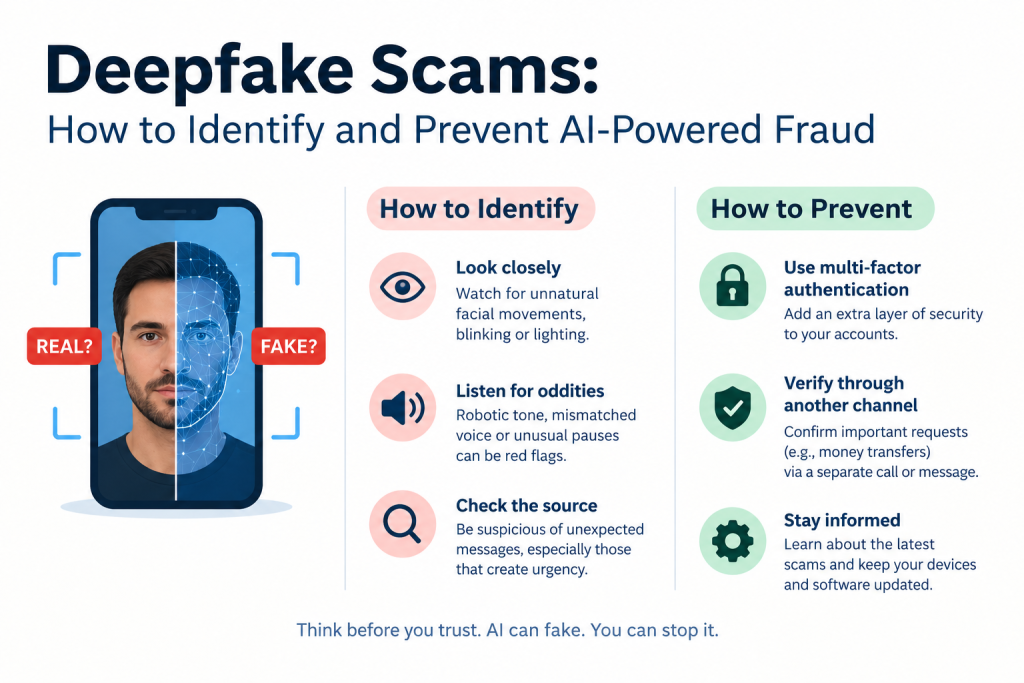
Artificial intelligence (AI) is changing how we work and communicate. However, criminals are using this technology to trick people and steal money. These crimes are known as deepfake scams.
Deepfake scams use AI to create fake videos, images, and voice recordings. As a result, criminals can pretend to be trusted people. They may pose as company managers, workmates, or family members.
These scams can cause serious harm. For example, a business may lose money or expose private data. Its reputation may also suffer. Therefore, everyone needs to know how these scams work and how to stay safe.
What Are Deepfake Scams?
Deepfake scams use AI to copy a person’s face, voice, or actions. Criminals use these fake images and recordings to fool their victims.
For example, a criminal may copy the voice of a company director. They may then call an employee and request an urgent payment.
Similarly, a fraudster may use a fake video call to pose as a workmate. The goal may be to steal money or gain access to private files.
Unlike many older scams, deepfakes can look and sound real. Therefore, it is not always easy to spot a fake message. You need to check the source before you trust what you see or hear.
5 Warning Signs of Deepfake Scams
Deepfake scams can take many forms. However, some warning signs can help you spot a possible attack.
Urgent Requests for Money
Criminals often create a sense of panic. They may claim that a payment must be made at once. For example, someone posing as your boss may ask you to send money to a new bank account.
However, a trusted person’s voice does not prove that a request is genuine.
How to stay safe: Call the person using a known phone number. Also, follow your company’s payment rules before sending money.
Strange Voice or Video Features
Some fake videos have odd facial movements. Others may show poor lip movement or unusual speech. You may also notice strange pauses or changes in the voice.
However, not all deepfakes have these signs. Some are very hard to spot. Poor internet quality can also cause similar problems.
How to stay safe: Do not rely on looks or sound alone. Instead, use another trusted method to confirm who you are talking to.
Requests for Private Information
A fraudster may ask for passwords, bank details, or private work files. They may pretend to be a manager or a member of your team.
For instance, a fake video call may be used to request access to a company account. As a result, the criminal may gain control of key systems.
How to stay safe: Never share your password or security code with someone who asks for it unexpectedly. If you are unsure, contact your IT team.
Suspicious Links and Messages
Criminals may send fake emails, text messages, or social media messages. These may include links to unsafe websites.
For example, a fake video message may ask you to sign in to view a file. However, the link may lead to a site that steals your login details.
How to stay safe: Check links before you open them. In addition, use official websites to access your accounts. Never enter private details on a site you do not trust.
Requests to Ignore Normal Rules
Fraudsters may ask you to skip checks or keep a payment secret. They may claim that the matter is urgent or sensitive.
However, such requests can be a warning sign. Criminals often use pressure to stop people from asking questions.
How to stay safe: Follow the normal rules for payments and data access. If a request seems unusual, check it with another trusted person before taking action.
How Businesses Can Prevent AI-Powered Fraud
Businesses can take steps to reduce the risk of deepfake scams. Although no single tool can stop every attack, a clear security plan can help protect staff, money, and data.
1. Check People’s Identities
First, businesses should set clear rules for checking identities. This is vital when staff handle money or private data.
For example, an employee can call a manager using a known phone number to confirm a payment request. The employee should not rely only on a voice note or video call.
In addition, businesses can use agreed security codes for high-risk requests. These steps make it harder for criminals to pretend to be trusted staff.
2. Train Employees to Spot Scams
Staff need to understand how deepfake scams work. Therefore, businesses should provide regular security training.
The training should cover fake videos, voice scams, phishing emails, and unsafe links. It should also explain how staff can report suspicious activity.
Furthermore, businesses can use safe practice tests to help staff spot common scams. Over time, this training can build safer habits.
3. Improve Email and Account Security
Strong account security can help protect a business from online attacks. For example, staff should use strong passwords and turn on multi-factor authentication.
Multi-factor authentication adds another step when someone signs in. As a result, a stolen password alone may not be enough to access an account.
Businesses should also use email security tools such as SPF, DKIM, and DMARC. These tools help protect against some types of fake email.
However, they cannot prove that a video or voice message is real. Therefore, businesses should combine these tools with identity checks and staff training.
4. Protect Private Data
Criminals may use public information to make their scams more convincing. For this reason, businesses should review what they share online.
For example, they should limit access to private files and customer records. Staff should also avoid sharing work documents through unapproved apps.
In addition, businesses should have clear rules for handling sensitive data. These steps can make it harder for criminals to gather details for an attack.
5. Prepare for a Cyber Attack
Even businesses with strong security can face fraud. Therefore, every business should have a plan for dealing with an attack.
The plan should explain how to report a scam and protect affected accounts. It should also show staff how to check suspicious payments and contact the right people.
If a business sends money to a fraudster, it should contact its bank at once. Quick action may help stop or recover the payment. However, recovery is not always possible.
A clear response plan can also reduce delays and limit damage to the business.
Why Cybersecurity Matters in the Age of AI
AI can help businesses save time and improve their services. However, criminals can also use it to create new types of fraud.
Therefore, businesses must take steps to protect their staff, customers, and data. This means using security tools, training employees, and checking unusual requests.
In addition, businesses should review their security rules as new threats emerge. Regular checks can help them find weak points before criminals do.
Most importantly, people should not trust every message just because it looks or sounds real. A quick check can prevent a costly mistake.
Finally
Deepfake scams are making online fraud harder to spot. Criminals can use fake voices, videos, and images to trick people into sending money or sharing private data.
However, businesses can lower these risks by taking simple steps. Staff should check unusual requests, protect their passwords, and follow payment rules. They should also report any message that seems suspicious.
As AI grows, online safety must remain a key part of every business plan. Stay alert, check before you trust, and make cybersecurity part of your daily routine.
DotConnectAfrica supports a safer digital future through greater awareness of online risks and responsible use of technology.
Want to learn more about digital security? Visit DotConnectAfrica for more digital insights and updates.

Recent Comments